Prenatal Massage Second Trimester: Is It Safe?
The second trimester is often when pregnancy starts to feel more physically demanding. A growing belly can change how you stand, sleep, walk, and sit at a desk, while low back tightness, hip discomfort, leg fatigue, and shoulder tension begin to compete for your attention. Prenatal massage second trimester sessions can offer meaningful relief when they are adapted to your body, health history, and comfort level.
For many expecting mothers, this is also the point when energy begins to return after the first trimester. That can make it a practical time to establish a consistent care routine that supports comfort, mobility, and rest as pregnancy progresses.
Is prenatal massage in the second trimester safe?
For an uncomplicated pregnancy, prenatal massage is commonly considered appropriate during the second trimester when your prenatal care provider has no concerns and your massage therapist is trained to work with pregnant clients. The key is not simply receiving a gentler massage. It is receiving a treatment that accounts for changing circulation, joint stability, positioning needs, and areas of sensitivity.
A qualified therapist should begin with a conversation about how you are feeling, how far along you are, whether you have pain or swelling, and any guidance from your OB-GYN or midwife. This assessment helps shape the session. A client whose main concern is desk-related neck and upper back tension may need a different approach from someone managing pelvic discomfort, nighttime leg cramps, or hip tightness from altered gait.
Massage is supportive care, not a replacement for prenatal medical care. Check with your provider before booking if you have a high-risk pregnancy, a history of blood clots, high blood pressure, preeclampsia, unexplained swelling, bleeding, severe headaches, fever, or new or concerning pain. A thoughtful therapist will welcome that conversation and may ask for provider clearance when appropriate.
What changes during a second-trimester massage?
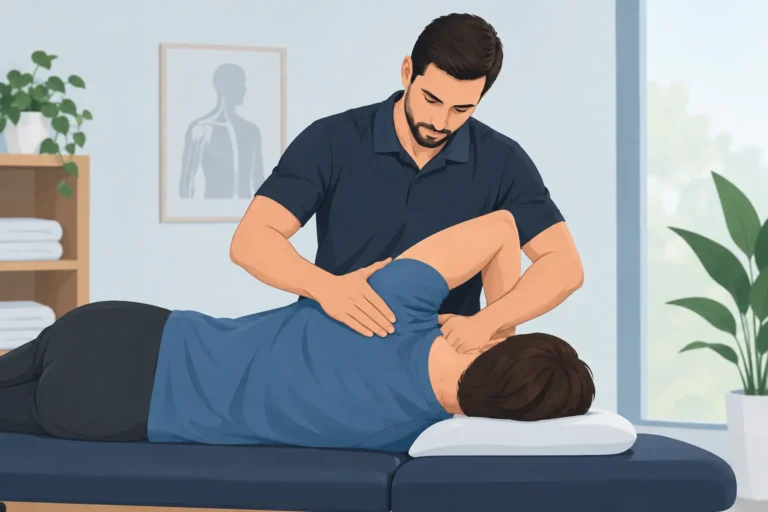
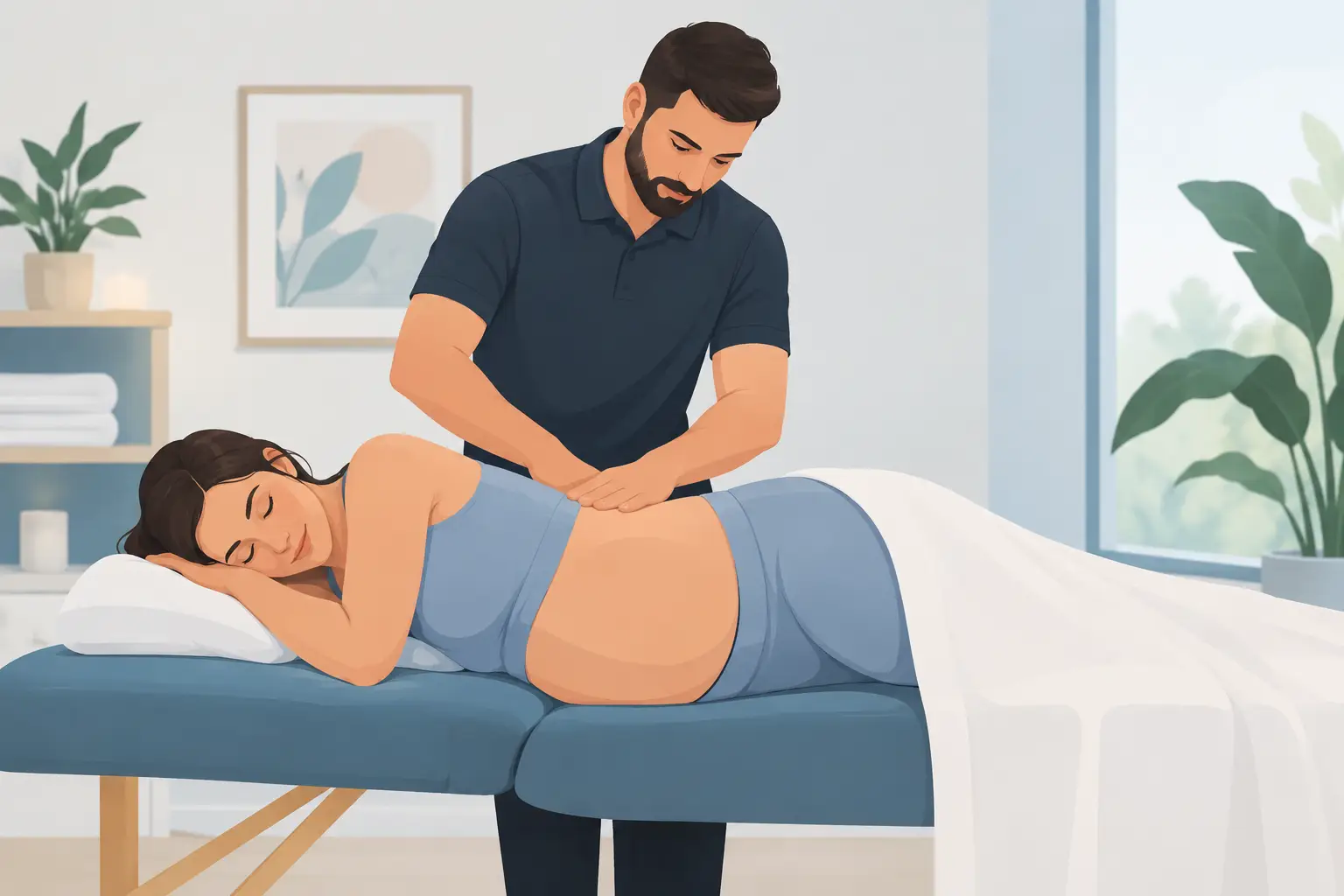
The biggest difference is positioning. Lying face down on a traditional massage table is generally no longer comfortable or practical. Lying flat on your back for an extended period can also become uncomfortable as pregnancy advances. Most prenatal massage sessions are performed side-lying with supportive pillows, bolsters, and careful draping. Some clients are comfortable in a semi-reclined position for part of the session.
Proper positioning does more than make the appointment pleasant. It helps the therapist access the shoulders, low back, glutes, hips, legs, and feet without asking your body to tolerate unnecessary strain. Pillows between the knees and under the head, along with support beneath the belly, can take pressure off the hips and help you relax more fully.
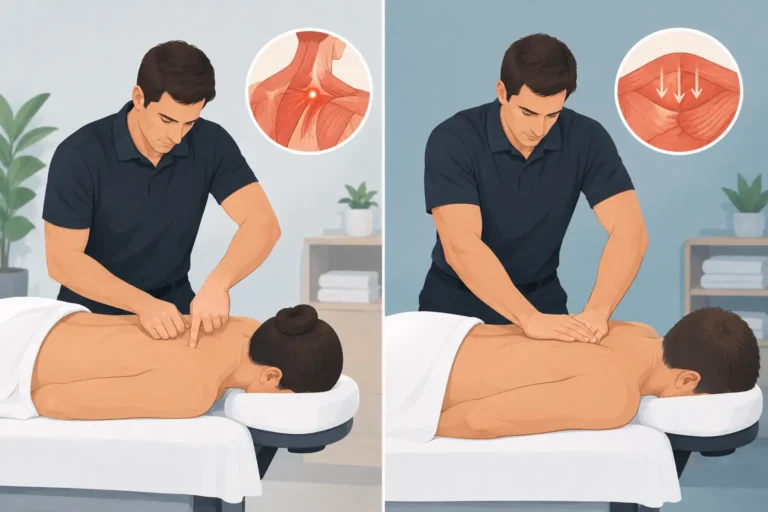
Pressure is adjusted as well. Prenatal massage does not have to be feather-light, but it should never feel aggressive or leave you bracing against the therapist’s work. Gentle to moderate, purposeful pressure can address muscular tension in the upper back, glutes, hip rotators, calves, and feet. The appropriate level depends on your comfort, tissue sensitivity, and current symptoms.
At Aleksei Therapeutic Bodywork, the goal is to work with the body you have that day, not follow a fixed routine. If turning onto one side makes your hip ache or a certain area feels unusually tender, the plan changes. Clear feedback during the session is part of safe, effective care.
Common reasons expecting mothers book in the second trimester
Pregnancy-related discomfort is rarely limited to one muscle. As the center of gravity shifts, the low back may work harder, the hip flexors and glutes may feel tight, and the upper back may round forward to accommodate changes in posture. A targeted session can help calm overworked soft tissue and make daily movement feel less restricted.
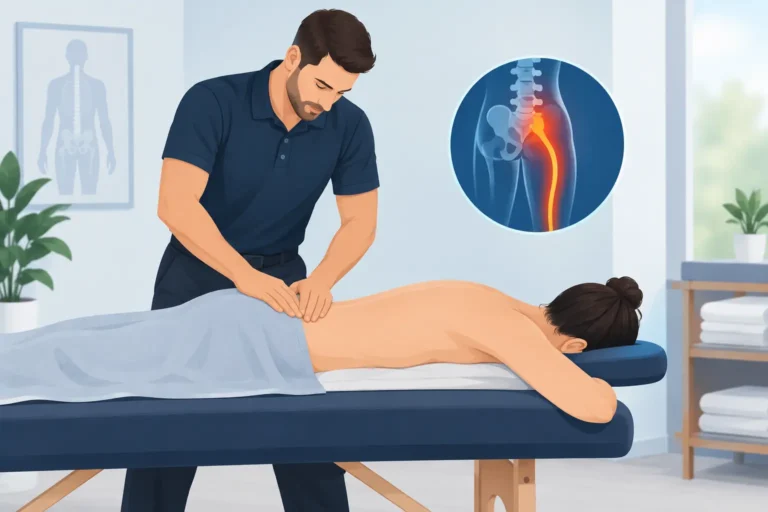
Low back and hip discomfort are frequent concerns. Massage may reduce tension in the muscles surrounding the pelvis, including the glutes and outer hips, while gentle work to the low back can support a more comfortable range of motion. The relief may be most noticeable when getting out of a car, walking after prolonged sitting, or trying to settle into a sleep position.
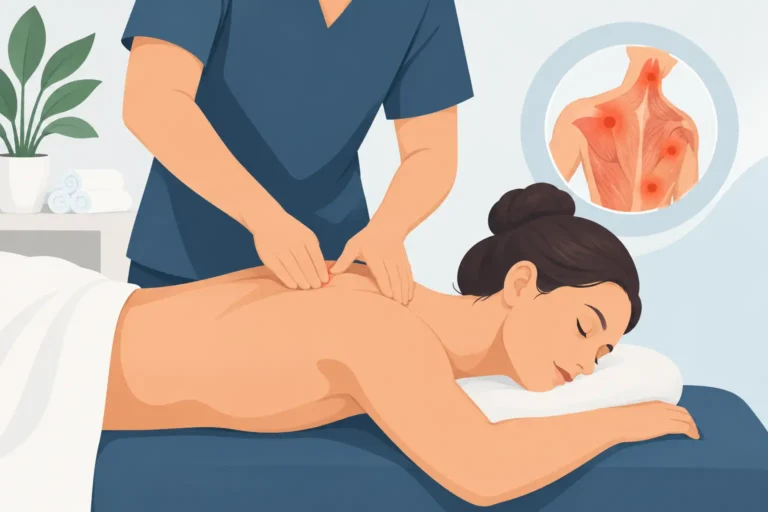
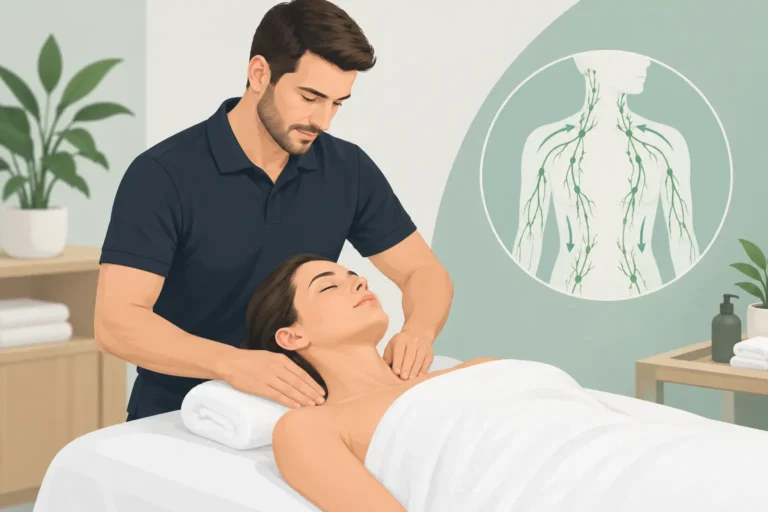
Neck and shoulder tension can be just as disruptive, especially for professionals who spend long hours at a computer. Pregnancy does not pause work deadlines, and stress often shows up in the upper trapezius, chest, jaw, and between the shoulder blades. Focused soft-tissue work and relaxation-based techniques can help reduce that held tension without overwhelming the nervous system.
Some clients also seek massage for heavy, tired legs or mild muscle cramping. Here, the therapist must first screen for symptoms that warrant medical attention. Sudden one-sided swelling, warmth, redness, or calf pain should not be massaged and should be evaluated by a medical professional promptly. When there are no warning signs, comfortable positioning and gentle leg work may help ease ordinary muscular fatigue.
What prenatal massage can and cannot do
A good second-trimester massage can help you feel more comfortable, more mobile, and better rested. It may reduce muscular soreness, encourage relaxation, and create a welcome pause from the physical demands of pregnancy. For clients carrying stress in their shoulders or experiencing tension from changing posture, those improvements can extend into everyday activities.
Still, massage is not a cure for every pregnancy symptom. It does not treat preeclampsia, prevent complications, diagnose the cause of pelvic pain, or replace evaluation of persistent numbness, weakness, severe swelling, or sharp pain. The most responsible approach is collaborative: massage supports comfort and soft-tissue health while your prenatal care team manages medical questions.
Results also vary. One client may feel lighter and sleep better after a single visit. Another may benefit more from regular appointments because muscle tension returns with work demands, exercise, or rapid physical changes. Frequency should reflect your symptoms, budget, provider guidance, and how your body responds, rather than a one-size-fits-all schedule.
How to prepare for your appointment
Arrive hydrated, but do not feel pressured to drink excessive amounts of water before massage. A light meal one to two hours beforehand is often more comfortable than arriving either hungry or overly full. Wear clothing that is easy to change in and out of, and plan to communicate openly about your comfort.
Before the session, share any areas of pain, recent changes in symptoms, exercise habits, sleep challenges, and recommendations from your medical provider. Mention whether you have experienced dizziness when reclining, sensitivity to scents, varicose veins, or prior injuries. These details help the therapist choose the right position, pressure, and treatment focus.
During the massage, speak up early if you feel nauseated, lightheaded, too warm, short of breath, or uncomfortable in any position. You do not need to wait until discomfort becomes significant. A pillow adjustment, a shift from side-lying to semi-reclined, or less pressure can make a substantial difference.
When to postpone and contact your provider
It is best to postpone massage and contact your prenatal provider if you have vaginal bleeding, leaking fluid, regular painful contractions, severe abdominal pain, chest pain, shortness of breath, severe headache, vision changes, fever, or sudden swelling in the face or hands. New one-sided leg pain or swelling also deserves prompt medical attention.
These precautions are not meant to create fear around massage. They simply recognize that pregnancy brings changes that deserve careful attention. A professional prenatal massage should leave you feeling listened to, physically supported, and confident that your comfort has been taken seriously.
The second trimester can be an excellent time to make room for care that helps your body move and rest more comfortably. Choose a therapist who asks good questions, adapts the session to you, and treats your feedback as an essential part of the treatment.