What Happens During Neuromuscular Massage?
A tight shoulder that keeps returning, low back discomfort after long workdays, or a hip that feels restricted during a run often has more than one cause. That is why people ask what happens during neuromuscular massage before scheduling. The session is designed to look beyond the place that hurts, identify patterns of muscular tension and movement compensation, and apply focused treatment at a pace your body can tolerate.
Neuromuscular massage is not a one-size-fits-all deep pressure service. It is a therapeutic approach that combines detailed listening, assessment, work with soft tissue and trigger points, and ongoing feedback. The goal is practical: reduce unnecessary muscle guarding, improve comfort and movement, and give you a clearer path forward.
What Happens During Neuromuscular Massage?
Your appointment begins with a conversation, not with pressure. Your therapist will ask what you are feeling, when it started, what makes it better or worse, and whether you have a history of injury, surgery, headaches, numbness, or other relevant health concerns. Daily habits matter too. Hours at a desk, repetitive lifting, a new training routine, sleep position, and stress can all contribute to persistent tension.
This discussion helps shape the session. For example, neck pain may be influenced by the upper back, chest, jaw, shoulder blade muscles, or workstation habits. Tight hamstrings may be related to how the hips, calves, or low back are sharing load. Massage does not replace medical diagnosis, but a careful therapeutic assessment can help identify muscular patterns worth addressing.
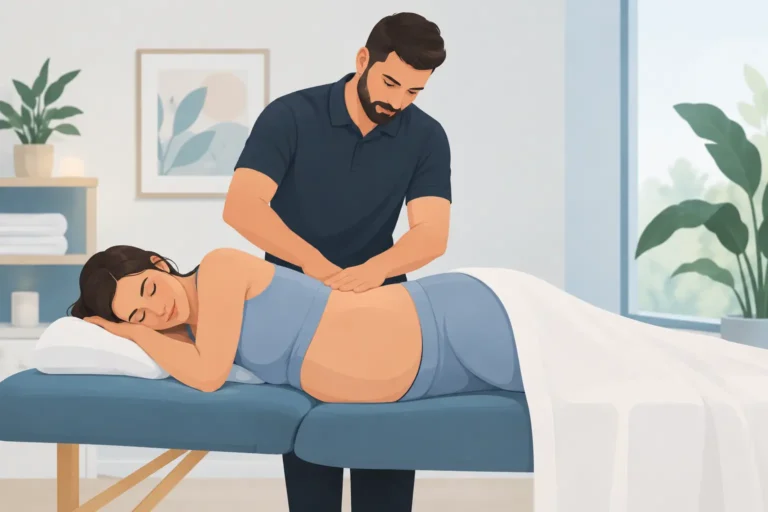
You will also have a chance to set clear preferences around pressure, areas to avoid, positioning, and comfort. If you are recovering from an injury, are pregnant, take medications that affect bruising, or have a health condition that may change treatment, say so before the session begins. A responsible plan adapts to your needs rather than pushing through them.
Assessment May Include Movement and Palpation
Depending on your goals, the therapist may observe simple movements such as turning your head, lifting an arm, bending, squatting, or walking a few steps. This is not a fitness test. It gives useful context about where motion feels limited, unstable, or painful.
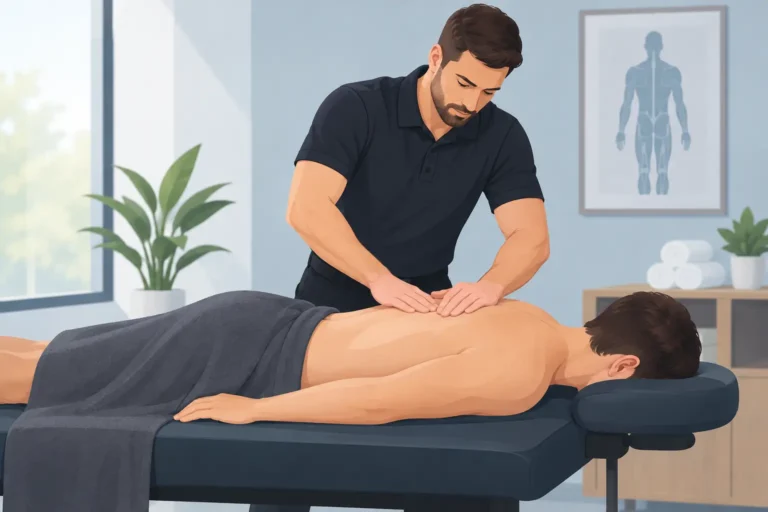
The hands-on assessment involves palpation, meaning the therapist gently feels the muscles and surrounding soft tissue for areas of tenderness, density, temperature change, or guarding. They may compare the left and right sides and check the tissues above and below the painful area. Your feedback matters here. You are the expert on what you feel, while the therapist uses that information to decide where treatment may be most useful.
Focused Work on Trigger Points and Tight Tissue
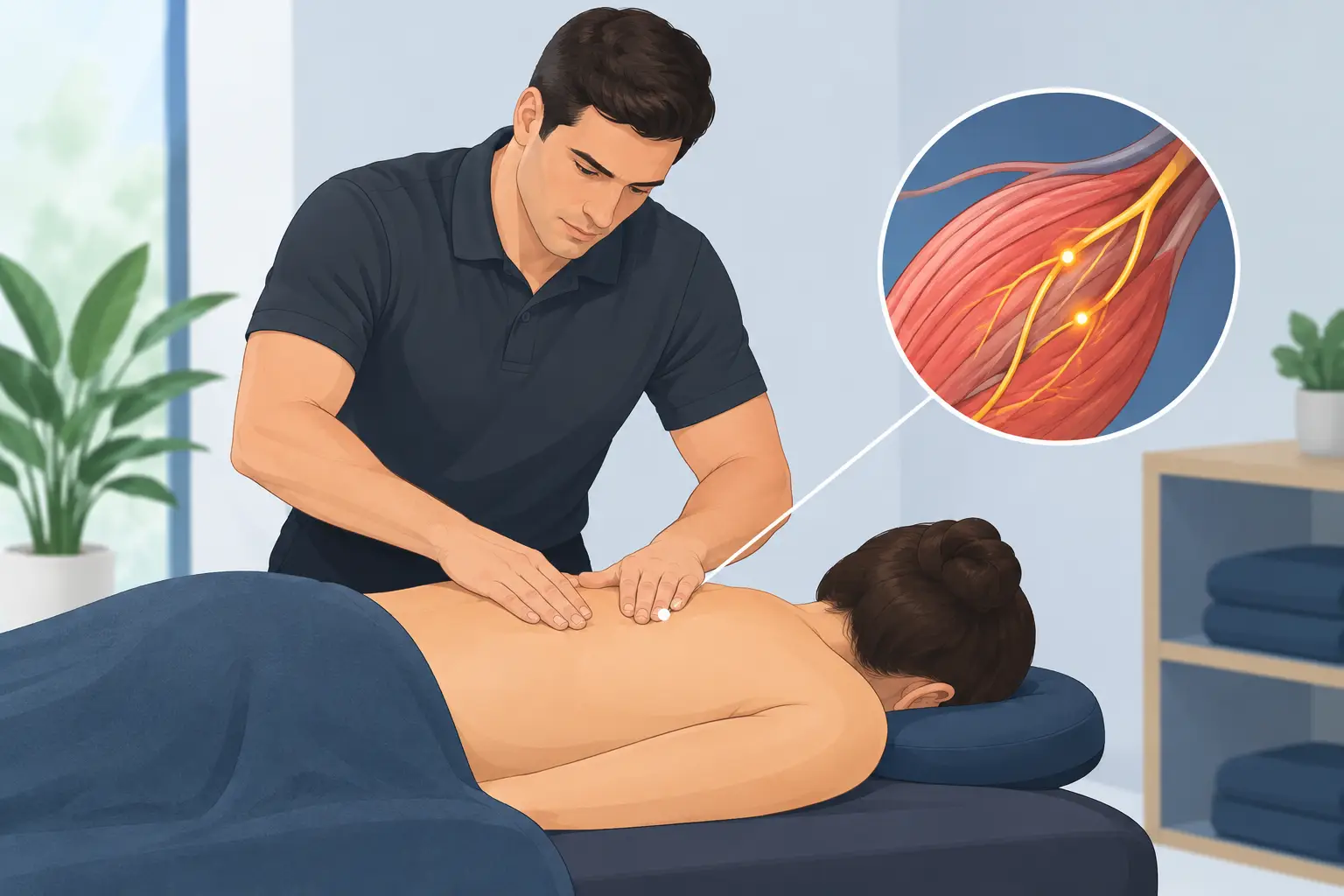
After the assessment, treatment typically begins with broader warming strokes to help the area relax and to assess how the tissue responds. From there, neuromuscular massage becomes more specific. The therapist may use slow, sustained pressure, friction, compression, stretching, or carefully directed movement to work with tight muscle fibers, fascia, and trigger points.
A trigger point is a sensitive spot in a muscle that may feel sore locally or refer discomfort elsewhere. For instance, a point near the shoulder blade can sometimes contribute to pain felt in the neck or upper arm. Not every tender spot needs intense pressure, and not every pain pattern is caused by trigger points. Treatment is guided by your symptoms, tissue response, and comfort rather than a rigid routine.
You may be asked to rate pressure, breathe steadily, or move a joint gently while the therapist works. These small adjustments can help target a muscle without creating unnecessary strain. In some cases, slower and lighter work produces a better response than forceful pressure, especially when the nervous system is already protecting an irritated area.
Therapeutic massage should feel productive, not punishing. You may notice tenderness, a familiar ache, warmth, or a sense that a tight area is gradually releasing. Sharp pain, burning, numbness, tingling, or the urge to hold your breath are signals to speak up right away. More pressure is not automatically better, and soreness is not the measure of a successful session.
The Work Often Extends Beyond the Painful Spot
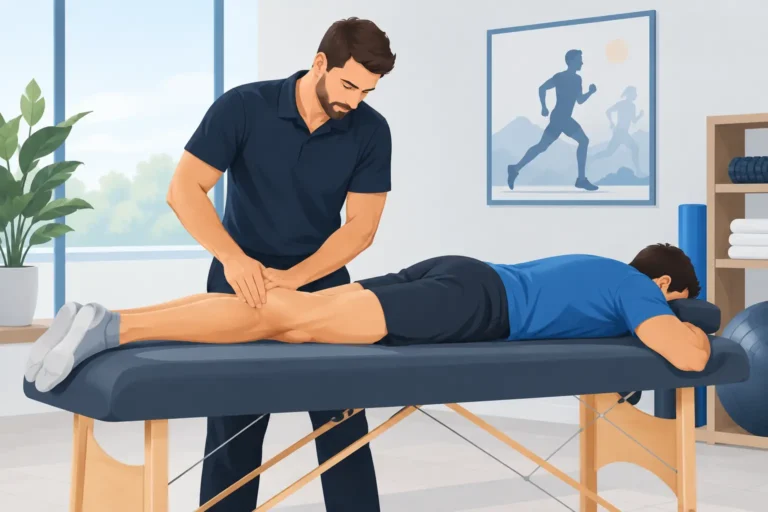
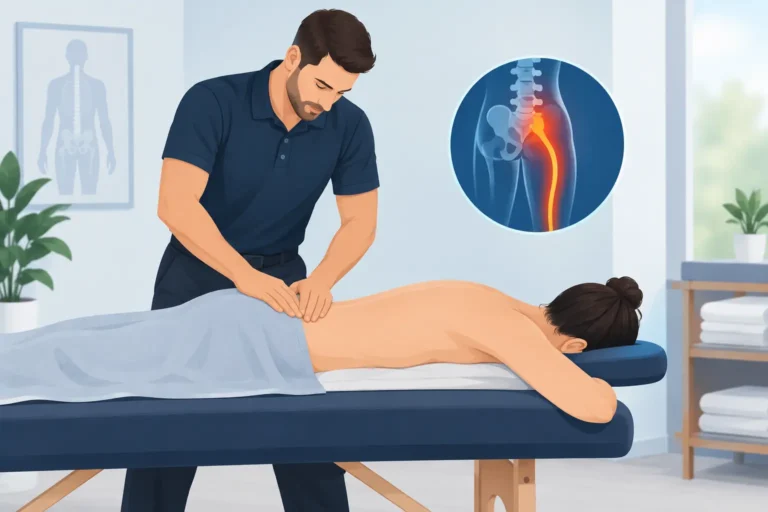
If your low back feels tight, the session may include the hips, glutes, abdominal wall, or thighs. If you have recurring shoulder tension, your therapist may address the chest, upper back, rotator cuff area, and muscles that support the shoulder blade. This broader view is one of the key differences between targeted therapeutic bodywork and simply rubbing the place that hurts.
Still, the scope of a session depends on time and priorities. Trying to address every tight muscle in one appointment can be less effective than focusing on the most relevant patterns. For chronic concerns, a series of sessions paired with practical changes in movement, work setup, recovery, or exercise may offer more durable progress than a single intensive treatment.
What You May Feel During and After Treatment
During neuromuscular massage, many clients feel a mix of relief and awareness. A muscle that has been bracing for weeks may feel surprisingly sensitive when touched. As it settles, you may notice easier breathing, freer movement, or less pulling in a familiar trouble spot. Others feel relaxed enough to become sleepy.
Afterward, it is common to feel looser, calmer, or more mobile. Some people experience mild tenderness for a day or two, particularly after work on long-standing tension or after returning to activity following an injury. Hydration, normal meals, gentle walking, and avoiding an unusually hard workout immediately afterward can support recovery. There is no need to force extra stretching if the area feels irritated.
Results vary. A recent muscle strain or desk-related tension may respond quickly, while pain connected to longstanding movement patterns, repetitive work, or previous injury can require more time. The appropriate frequency depends on your symptoms, goals, activity level, and how your body responds between appointments.
Contact a qualified medical provider rather than relying on massage alone if you have sudden severe pain, unexplained swelling, fever, significant weakness, loss of sensation, new bowel or bladder changes, or symptoms following a serious accident. Massage is most helpful when it is part of sensible, well-coordinated care.
How to Prepare for Your Session
Arrive a few minutes early, wear comfortable clothing, and avoid a heavy meal immediately before your appointment. You do not need to know the names of every muscle or arrive with a perfect explanation of your pain. It is enough to describe what you notice: where it hurts, what movements aggravate it, what you have already tried, and what you would like to do more comfortably.
During the massage, only the area being worked on is uncovered, and professional draping is maintained throughout. Let your therapist know if you need a position change, a pillow, less pressure, more warmth, or a break. Comfort is not separate from effective care. When you feel safe and heard, it is easier for the body to respond to treatment.
At Aleksei Therapeutic Bodywork, neuromuscular massage is adapted to the person on the table, whether the goal is easing computer-related neck tension, supporting recovery after training, or improving movement around a stubborn hip or low back. The most useful next step is often simple: notice how your body feels over the next day or two, then use that feedback to shape the care that follows.