Massage to Reduce Muscle Tension That Works
A stiff neck after a day at the computer, shoulders that seem to live near your ears, or a low back that protests when you stand up are not always signs that you need more stretching. Often, the issue is a pattern of overworked soft tissue, protective muscle guarding, and limited movement that has built up over time. A massage to reduce muscle tension can help interrupt that pattern by addressing the tissues that are doing too much work and the habits that keep them there.
The goal is not to force a tight muscle to “release” through painful pressure. Effective therapeutic massage works with your body, using the right technique and intensity for your symptoms, health history, and comfort level. For many people in Culver City, Playa Vista, and nearby Los Angeles neighborhoods, that means better mobility, less daily discomfort, and a clearer sense of what their body needs between appointments.
Why muscles become tense in the first place
Muscle tension is often a useful short-term response. Your nervous system may increase muscle activity after an awkward movement, a demanding workout, a stressful week, or an injury. That extra support can feel protective at first. The problem begins when the body does not fully return to its usual resting state.
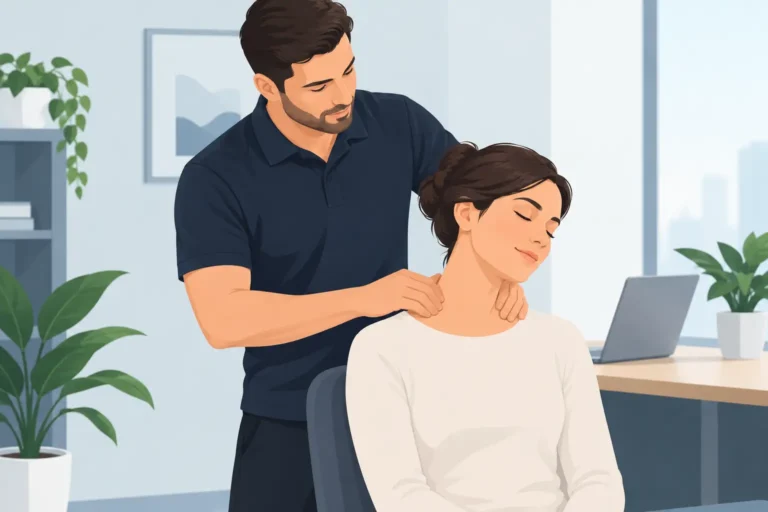
Desk work is a common example. Hours of looking slightly down at a screen can overload the muscles around the neck, upper back, chest, and shoulders. The discomfort may be felt between the shoulder blades or as headaches, even though the contributing tension is spread across several areas. Likewise, runners may feel calf tightness that is connected to foot mechanics, hip mobility, training volume, or recovery habits.
Stress can add another layer. When stress is high, shallow breathing, jaw clenching, and elevated shoulders may become automatic. Massage cannot remove every source of stress, but it can create a meaningful opportunity for the nervous system and soft tissue to downshift.
How massage to reduce muscle tension helps
Therapeutic massage uses skilled touch to assess and work with muscles, fascia, and other soft tissues. Depending on what is found, treatment may include broad warming strokes, focused pressure around trigger points, slow work on restricted tissue, and assisted movement. The best approach depends on the person, not just the location of pain.
Pressure can improve comfort and body awareness, while slower, more targeted techniques may help reduce the sensitivity of an overactive area. Massage also supports circulation in the treated tissues and can make it easier to move through a comfortable range of motion afterward. Those changes can be especially useful when stiffness has made everyday movement feel guarded or effortful.
That does not mean deeper is always better. Very aggressive work can leave already irritated tissue feeling more protective, sore, or fatigued. Productive massage may feel intense at times, but it should remain manageable. You should be able to breathe normally, relax into the work, and communicate clearly with your therapist.
Neuromuscular massage for persistent knots and referred discomfort
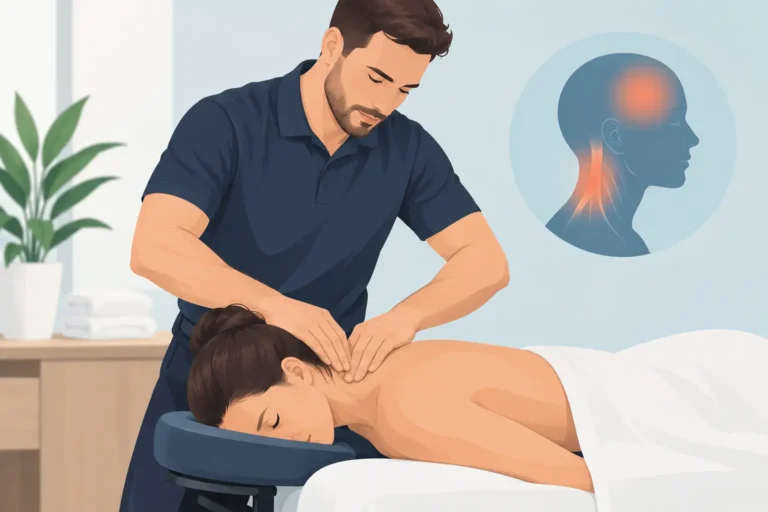
Neuromuscular massage is often a good fit for recurring tension patterns, tender trigger points, and discomfort that seems to travel. A trigger point in the upper shoulder, for example, may contribute to pain felt farther up the neck or into the head. Treatment uses deliberate pressure and assessment to identify areas that may be contributing to the larger pattern.
This is not simply a search for the most tender spot. A practitioner considers how nearby muscles are sharing the workload, where movement is restricted, and whether the painful area is compensating for a problem elsewhere. That broader view is particularly helpful for chronic neck, shoulder, hip, and low-back tension.
Deep tissue massage for dense, restricted soft tissue
Deep tissue massage can be useful when muscles and fascia feel dense, limited, or chronically overworked. The work is slower and more specific than a relaxation-focused massage, but it should never be a test of endurance. Your feedback guides the pressure throughout the session.
For active adults, deep tissue techniques may help address training-related tightness when they are paired with sensible recovery and movement habits. If a recent injury is still inflamed, however, intense pressure may not be appropriate. Timing matters.
Swedish massage when stress is driving the tension
Sometimes the most appropriate treatment is not the deepest one. Swedish massage uses smoother, more flowing techniques that can calm the nervous system and ease generalized muscle holding. It may be a strong option when poor sleep, work stress, or overall fatigue is making your body feel constantly braced.
Relaxation is not separate from therapeutic care. When your system feels safer and less activated, muscles may be more receptive to treatment and movement can feel easier.
What a personalized session should include
A useful massage appointment starts before hands-on work begins. Your therapist should ask about your symptoms, daily activities, prior injuries, health conditions, and goals. If you say your right shoulder is tight, the follow-up questions matter: When did it start? Is there numbness or tingling? Does it hurt overhead, at night, or only after work? What makes it better or worse?
That conversation helps determine which areas to assess and which techniques are appropriate. It also creates a plan that can change if your body responds differently than expected. At Aleksei Therapeutic Bodywork, treatment is adapted to your comfort, current condition, and goals rather than following a routine sequence.
During the massage, communicate in real time. Mention pressure that feels sharp, burning, numbing, or too intense. Let your therapist know if you are cold, uncomfortable in a position, or experiencing symptoms that differ from your usual tension. Clear feedback is part of good clinical care, not an interruption.
Afterward, you may feel lighter, calmer, or more mobile right away. Some people experience mild tenderness for a day, especially after focused work on long-standing tightness. Gentle movement, normal hydration, and avoiding an unusually hard workout immediately afterward can make recovery more comfortable.
Getting results that last beyond the table
Massage can create relief, but repeated tension usually has more than one cause. The best long-term results often come from combining treatment with small, realistic changes in your routine.
If you work at a desk, brief movement breaks can be more useful than one perfect posture held all day. Change positions, stand up between meetings, and give your eyes a break from the screen. If training is the issue, consider whether your volume, recovery, sleep, or warm-up has changed recently. A body that is always asked to perform without enough recovery will often respond with tightness.
Pay attention to the movements that become easier after massage. If turning your head, reaching overhead, or squatting feels better, use that window to practice gentle, comfortable movement. Your therapist may also suggest simple mobility work or self-care strategies based on your specific pattern.
The right appointment frequency varies. A recent flare-up may benefit from closer follow-up, while a stable maintenance routine might be less frequent. Your schedule, budget, activity level, and response to treatment all matter. The goal is not to make you dependent on massage. It is to help you move and feel better with a plan that fits your life.
When massage is not the right first step
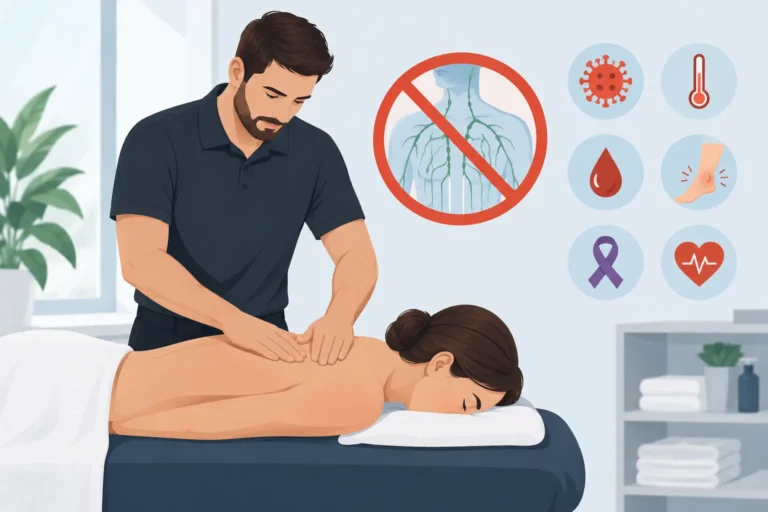
Massage is valuable for many types of muscular tension, but it is not a substitute for medical evaluation when symptoms suggest something more serious. Seek prompt medical care for sudden weakness, loss of coordination, chest pain, severe unexplained pain, fever, significant swelling, or new bowel or bladder changes. Numbness, tingling, or pain that travels down an arm or leg also deserves careful assessment, particularly if it is worsening.
Tell your therapist about recent surgery, blood clots, active infection, skin conditions, osteoporosis, cancer treatment, medications that affect bleeding, and pregnancy-related concerns. Prenatal massage can be supportive from the second trimester onward when appropriately adapted, but individualized screening still matters. Manual Lymphatic Drainage also requires a thoughtful review of your health history because it is a specialized, gentle treatment with specific indications and contraindications.
Muscle tension often has a story behind it. A thoughtful massage session can help you understand that story, reduce the strain your body is carrying, and make everyday movement feel more available again.