Massage Headache Relief for Neck Tension
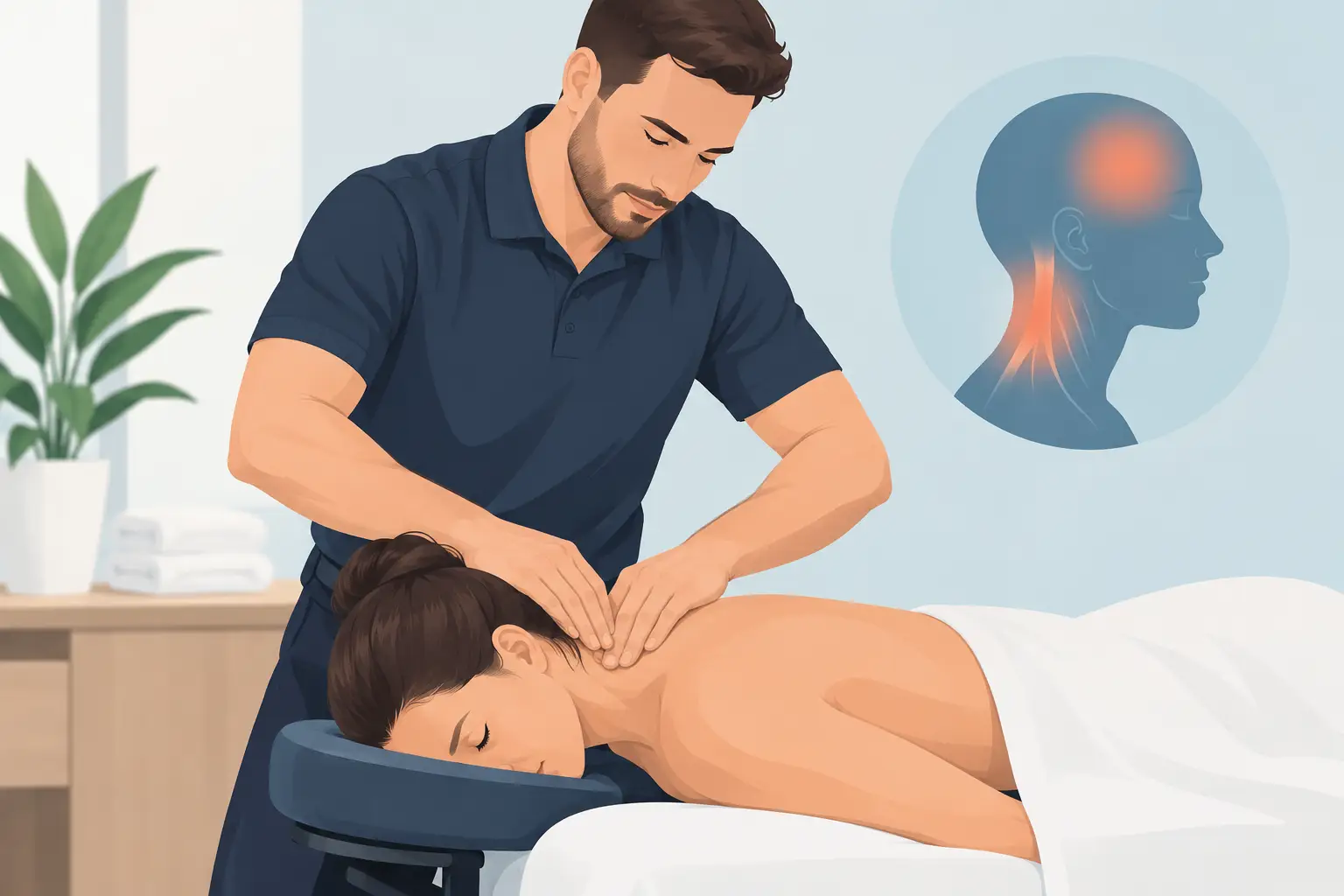
A headache that starts at the base of your skull after a long workday rarely feels like a simple head problem. Tight upper trapezius muscles, a stiff neck, jaw clenching, shallow breathing, and hours spent looking down at a screen can all contribute to pain that travels upward. For many people, massage headache relief means addressing those overworked soft tissues before they continue sending pain signals into the head.
Massage is not a cure for every type of headache, and it should never replace medical evaluation when symptoms are new, severe, or concerning. But when headaches are connected to muscle tension, posture, stress, or trigger points, a personalized therapeutic massage can be a practical part of a long-term relief plan.
When Massage Headache Relief Is Most Likely to Help
Massage tends to be most useful for tension-type headaches and some cervicogenic headaches. Tension headaches often create a dull, steady pressure across the forehead, temples, or back of the head. Cervicogenic headaches begin with dysfunction or irritation in the neck, with pain that may radiate toward one side of the head, behind the eye, or into the temple.
The distinction matters because the same headache location can have different causes. A therapist should not assume that temple pain is only a temple issue. The source may be restricted movement in the upper neck, trigger points in the shoulders, an irritated jaw, or accumulated strain from a workstation that is not supporting your body well.
A thoughtful session begins with a conversation about your symptoms. When does the headache appear? Is it worse after driving, computer work, exercise, poor sleep, or stressful days? Does turning your head feel limited? Do you wake up with jaw tension? These details help guide treatment toward the patterns most likely to be contributing.
Common muscle patterns behind headache pain
The upper trapezius and levator scapulae are frequent contributors. These muscles help support and move the shoulders and neck, but they can become overactive when you sit with your shoulders elevated, carry a heavy bag, or work with your arms reaching forward. Trigger points in these areas may refer pain toward the base of the skull or the side of the head.
The suboccipital muscles, a small group at the base of the skull, also deserve attention. They work constantly to help position the head. Forward-head posture, prolonged screen time, and stress-related bracing can leave them guarded and sensitive. Gentle, sustained work in this area can sometimes reduce the pressure that clients describe as a tight band around the head.
Jaw muscles may be part of the picture as well. Clenching during concentrated work, nighttime grinding, or general stress can overload the masseter and temporalis muscles. When jaw tension is involved, treatment should be comfortable and conservative, with clear communication throughout. Massage can help reduce surrounding muscular tension, but persistent jaw pain, clicking, or suspected teeth grinding may also call for evaluation by a dentist or TMJ-focused provider.
What a Therapeutic Massage Session May Include
Effective headache-focused massage is not necessarily the deepest massage. When tissues are already irritated, aggressive pressure can cause more guarding or leave you sore enough to trigger another headache. The goal is to reduce unnecessary tension, improve mobility, and calm the nervous system without overwhelming the body.
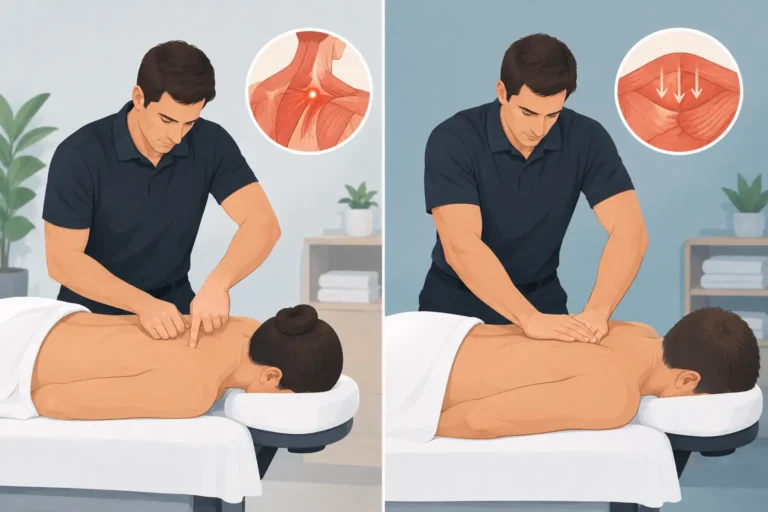
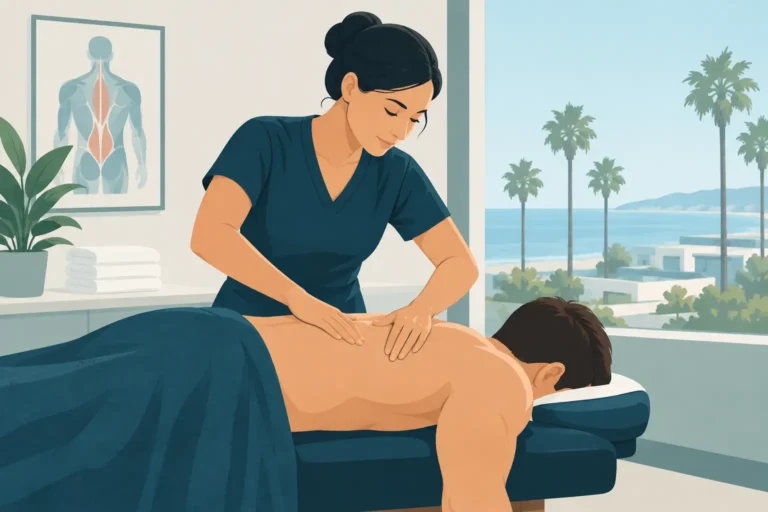
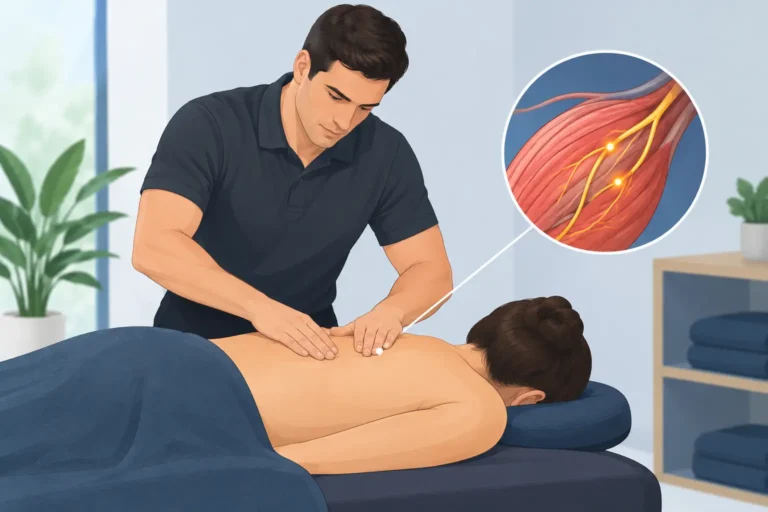
A session may include neuromuscular massage techniques to locate and address active trigger points in the neck, shoulders, and upper back. Slow, precise pressure can help release areas that reproduce familiar referral patterns. Myofascial work may be used to improve glide between restricted soft tissues, while focused work around the shoulder blades can reduce the load being transferred into the neck.
Gentle work to the scalp, temples, and base of the skull can be deeply calming for some clients. Others benefit more from addressing the chest and front-of-shoulder muscles that pull the body forward. If your head feels heavy by late afternoon, opening restricted areas in the pectoral muscles and improving upper-back movement can be as relevant as treating the neck itself.
Your feedback shapes the session. Pressure should feel productive, not sharp, alarming, or difficult to tolerate. A licensed massage therapist can adjust technique, positioning, and pace based on your sensitivity that day. For clients who arrive with an active headache, a quieter, gentler approach may be more appropriate than intensive deep tissue work.
Can Massage Help Migraines?
Massage may support people who experience migraines by reducing stress and muscular tension between episodes, improving sleep quality, and easing neck discomfort that can accompany migraine. However, migraine is a neurological condition, and massage is not a substitute for medical care or a prescribed treatment plan.
Some people find touch and pressure soothing during a migraine; others find it intolerable. Light massage in a dark, quiet room may be comfortable for one person, while another may prefer to wait until the acute phase has passed. It depends on your symptoms, sensitivity to light and sound, medication plan, and migraine pattern.
If you have frequent migraines, tracking your episodes can help you and your healthcare provider identify triggers. Note sleep, hydration, skipped meals, stress levels, menstrual cycle changes, screen use, and neck pain. Massage can be one supportive element, particularly when upper-body tension is a consistent factor, but it works best as part of a broader care approach.
When a Headache Needs Medical Attention First
Do not book a massage as the first response to a sudden or unusual severe headache. Seek urgent medical care for a headache that reaches maximum intensity quickly, follows a head injury, or occurs with fainting, confusion, weakness, numbness, facial drooping, trouble speaking, vision changes, fever, stiff neck, chest pain, or severe vomiting.
You should also speak with a medical professional about a new headache pattern, a headache that is becoming more frequent or intense, headaches that wake you from sleep, or headaches during pregnancy that are severe or accompanied by swelling, visual symptoms, or upper abdominal pain. These signs need clinical assessment, not soft-tissue treatment.
A responsible massage therapist will ask about relevant health history and may recommend postponing treatment or obtaining clearance when symptoms fall outside the scope of massage therapy. That is not a barrier to care. It is part of putting safety first.
Supporting Relief Between Appointments
The benefits of massage often last longer when the daily strain pattern changes too. You do not need a perfect ergonomic setup or an elaborate routine, but small adjustments can reduce how quickly tension rebuilds.
Set your screen high enough that you are not repeatedly bending your neck downward. Let your shoulders drop before typing, and take brief movement breaks before discomfort becomes pain. A few slow neck rotations, shoulder blade movements, and a short walk can interrupt the fixed positions that feed muscle guarding.
Hydration, regular meals, sleep, and stress recovery also matter. Headaches are rarely caused by one factor alone. If you tend to clench, try checking in during predictable moments of concentration: driving, answering emails, lifting weights, or preparing for sleep. Letting the tongue rest gently and separating the teeth can reduce unnecessary jaw effort.
For recurring tension patterns, consistency usually works better than waiting for a severe flare-up. At Aleksei Therapeutic Bodywork, treatment can be adapted to your headache history, mobility needs, pressure preferences, and the physical demands of your work or training. The aim is not simply to make you feel better for an hour, but to help your body maintain more comfortable movement between sessions.
The most useful next step may be simple: notice where your headache begins, what your body was doing beforehand, and whether neck, shoulder, or jaw tension is part of the pattern. That information turns a vague pain complaint into a clearer starting point for care.