Massage for Running Recovery That Fits Training
The calf that feels fine during a run but knots up after you stop is not always asking for more stretching. It may be responding to a sudden increase in mileage, hill work, long hours at a desk, old ankle stiffness, or a training plan that has outpaced recovery. Massage for running recovery can help address these patterns by reducing protective muscle tension, improving comfortable movement, and giving you a clearer sense of what your body needs before the next session.
For runners in Culver City, Playa Vista, and nearby Los Angeles communities, the goal is not simply to feel loose for an hour. A well-timed, individualized massage should support the work you are doing – whether that means preparing for a race, staying consistent through a training block, or returning carefully after a strain.
What massage can and cannot do for runners
Massage therapy can be a useful part of a broader recovery routine. Targeted soft-tissue work may reduce the feeling of tightness or soreness, calm overworked muscles, and improve your comfort with movements such as squatting, climbing stairs, or walking downhill. It can also help identify areas that are working harder than they should, including the calves, hip flexors, glutes, hamstrings, and muscles around the shoulder and mid-back that contribute to running posture.
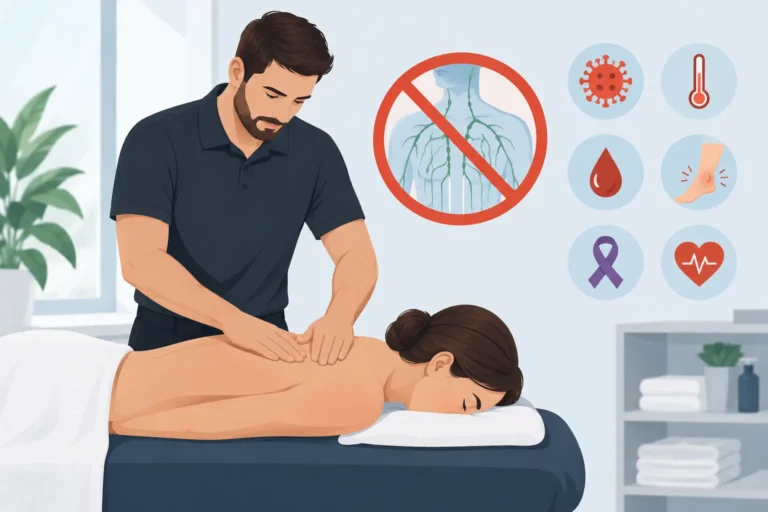
What it does not do is replace sleep, adequate fueling, strength work, progressive training, or medical evaluation when something feels wrong. Massage does not “flush out” injury or make it safe to run through sharp pain. If you have significant swelling, numbness, weakness, a sudden pop, bruising, pain that changes your gait, or symptoms that continue to worsen, stop training and seek appropriate medical guidance.
The value of therapeutic massage is often in the details. A runner with recurring outer-knee discomfort may need more than attention on the painful spot. Restricted hip motion, glute fatigue, foot mechanics, or an abrupt jump in downhill mileage may all be part of the picture. Looking at the whole pattern allows treatment to be more useful than a standard full-body session.
Massage for running recovery: timing matters
The right time for a massage depends on what your legs have just done and what they need to do next. A deep, intense session may feel satisfying after a hard training cycle, but it is not always the best choice 24 hours before intervals, a long run, or race day.
After a hard run or race
In the first day or two after a demanding event, many runners benefit from lighter, calming work. Swedish techniques, gentle circulation-focused strokes, and careful work around areas of tension can be more appropriate than aggressive pressure. Your tissues may already be sensitive, especially after a marathon, trail race, or unfamiliar downhill route.
The aim is comfort and relaxation, not testing your pain tolerance. If your legs are sore to the touch, heavy pressure can leave you more tender and may interfere with your next easy run. Hydrate, eat a balanced meal, and pay attention to how your body feels over the next 24 hours.
During a training block
Regular massage is often most useful when it is planned around your schedule instead of saved for a crisis. Some runners choose sessions every two to four weeks during higher-mileage periods, then adjust based on symptoms, workload, and budget. Others come in when a familiar restriction starts changing their stride or making recovery less predictable.
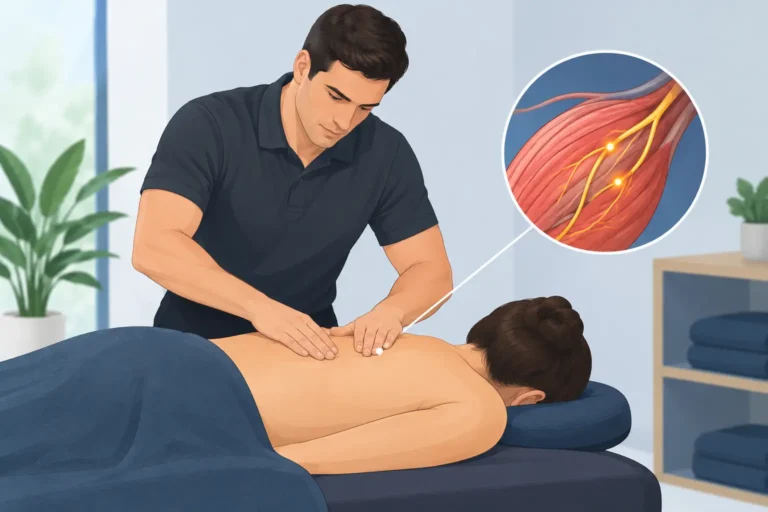
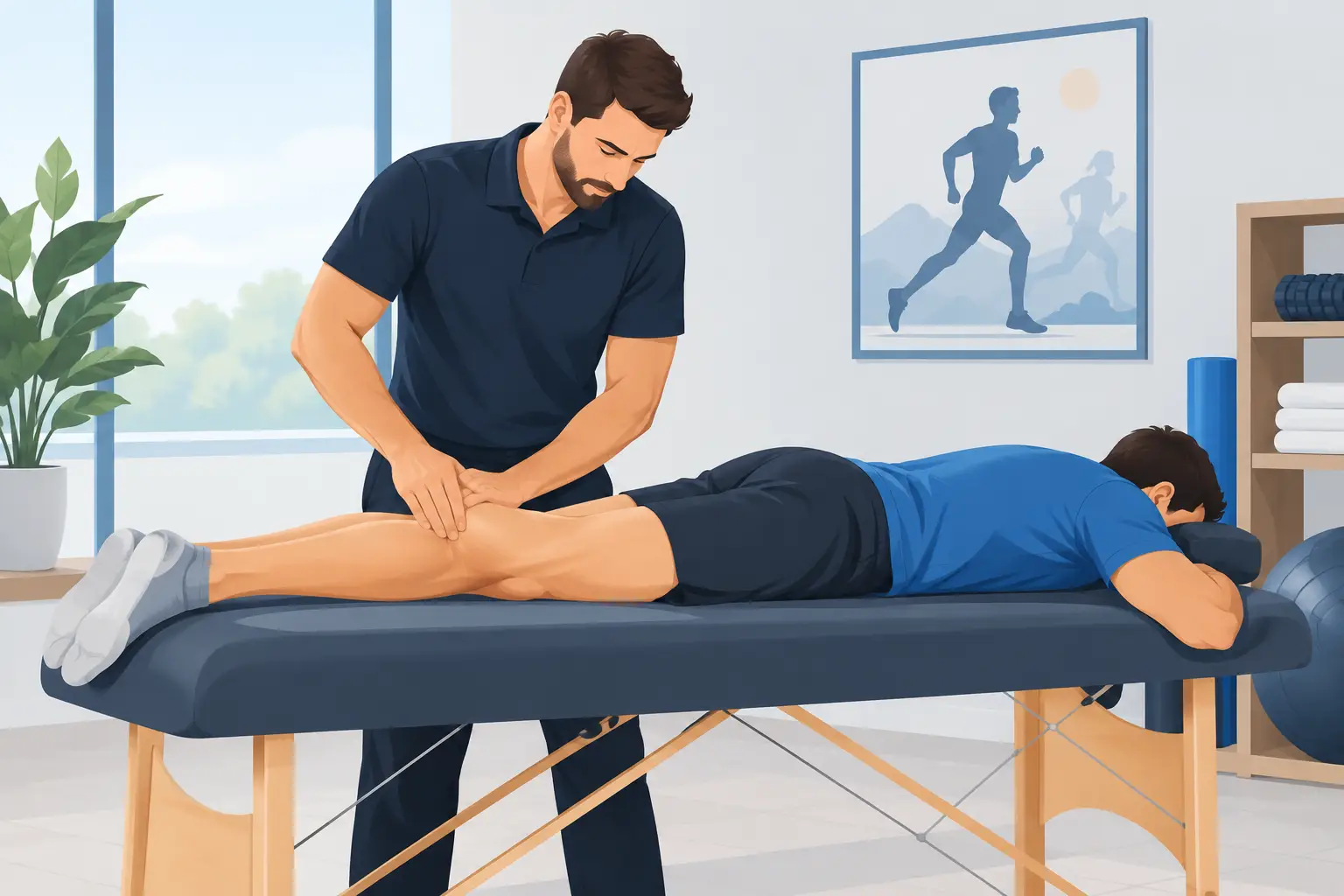
A session during training may include neuromuscular massage for trigger points that contribute to persistent calf or hip tension, as well as focused work on fascia and surrounding soft tissue. Pressure should be adapted to your tolerance and the demands of your upcoming runs. You should be able to leave feeling more comfortable, not beaten up.
Before race day
Pre-race massage should usually be shorter and lighter than a recovery appointment. Gentle work several days before an event may help you feel relaxed and mobile. Very deep treatment the day before a race can sometimes create soreness or a heavy-legged feeling, particularly if it is new to you.
If you know that massage helps you feel ready, do not experiment with an unfamiliar style or unusually intense pressure during race week. Keep the routine familiar. Race day is not the time to chase a dramatic change in flexibility.
Areas runners often need addressed
Runners do not all hold tension in the same place. Your pace, footwear, work posture, previous injuries, running surface, and strength training habits all matter. Still, several areas commonly deserve attention.
The calves and feet work continuously to absorb force and propel you forward. When they are overworked, you may notice stiffness first thing in the morning, tightness after hills, or pulling around the Achilles area. Massage can address the calf complex and plantar tissues carefully, but sharp Achilles pain or notable swelling needs medical assessment rather than deeper pressure.
The hips and glutes are another common focus. Prolonged sitting can leave the hip flexors feeling shortened while the glutes struggle to contribute efficiently during running. Targeted work may improve comfort around the front and side of the hip, while helping you move more freely into hip extension.
Hamstrings, quadriceps, and the muscles along the outside of the thigh can also become reactive when training changes quickly. Instead of applying intense pressure directly to one sensitive band of tissue, a therapeutic session may work with the surrounding glutes, quadriceps, hip rotators, and fascia to reduce strain across the area.
Upper-body tension deserves attention too. A clenched jaw, raised shoulders, and a stiff upper back waste energy and can make a long run feel harder than it should. Runners who work at a computer often notice that treating neck, shoulder, and thoracic tension helps their breathing and arm swing feel less restricted.
How to make your session more useful
The most helpful information is often practical. Share when symptoms began, what a typical week of running looks like, where discomfort appears during a run, and whether it changes afterward. Mention past injuries, current medical care, medications, pregnancy, recent procedures, and any history of blood clots or circulation concerns. This helps your massage therapist choose techniques that are appropriate and safe.
Arrive hydrated and avoid scheduling a demanding workout immediately after a deeper session. An easy walk, gentle mobility, and a normal meal are usually better choices. Mild tenderness can happen after focused work, especially if tissues have been guarded for a long time, but significant or lasting pain is feedback that the session was too intense or that another issue needs attention.
At Aleksei Therapeutic Bodywork, treatment can be adjusted as your training changes. Some sessions may emphasize deep tissue and neuromuscular techniques for persistent trigger points. Others may be lighter and more restorative, especially when you are close to an event or managing overall stress. Your feedback during the appointment is part of the treatment, not an interruption.
When to choose a different kind of care
Massage is most appropriate when muscular tension, mobility limitations, and recovery discomfort are the main concerns. It is less appropriate as a first response to severe or unexplained symptoms. Pain that is sharp, constant at rest, associated with fever, accompanied by redness or unusual warmth, or severe enough to alter your gait should be evaluated by a qualified medical professional.
The same caution applies to suspected stress injuries. A stress fracture can initially feel like a small, stubborn ache that becomes more localized and painful with impact. No amount of soft-tissue work should be used to push through that warning sign. Protecting your ability to run next month matters more than forcing one more run this week.
Build recovery around the runner you are
There is no prize for receiving the deepest massage, just as there is no prize for making every easy run hard. Effective recovery is usually quieter: enough sleep, enough food, sensible mileage progression, strength and mobility work that fit your body, and hands-on treatment when it supports your goals.
If running has started to feel less fluid, pay attention before discomfort becomes your normal. A thoughtful massage session can be a practical place to slow down, assess what has changed, and give your body the care it needs to keep moving with confidence.